Inside the Guitar Collection of PalmGuitar Inventor Tim Richards
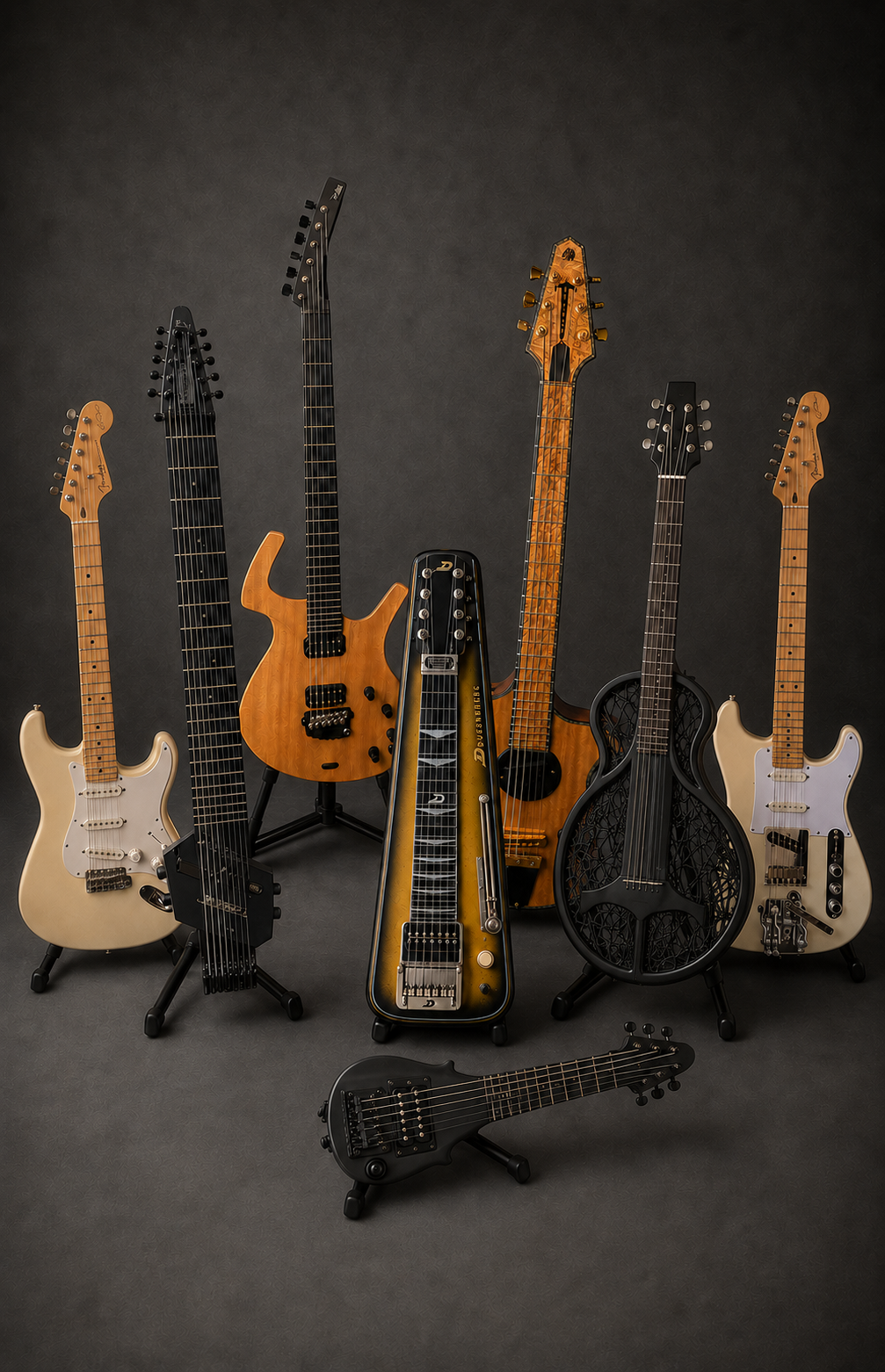
The collection consists of over 30 guitars, many unique and difficult to find
When the family of guitar inventor Tim Richards hired Sundown Modern Vintage & Estate Sales to help research and liquidate his extensive personal guitar collection, we knew there would be a substantial amount of work ahead. We did not yet understand how far the collection extended beyond conventional guitars.
As we began inventorying the instruments, familiar names appeared: Fender, Gibson, Ibanez and Rickenbacker. Then came the guitars that required us to stop, document what we were seeing and begin a much deeper level of research.
There was a Chapman Stick. A Duesenberg Fairytale lap steel. More than one Parker Fly. A Rick Turner Renaissance. And a black open-frame instrument carrying a particularly significant marking: Chrysalis Serial No. 001.
There were also PalmGuitars, still in their original packaging.
The collection was assembled by Tim Richards, inventor and designer of the PalmGuitar. With his family's permission, we are identifying Tim and discussing his connection to the instruments. Knowing who assembled the collection helps explain why so many of these guitars challenge the conventional idea of what an instrument should look like or how it should function.
The inventor behind the collection
Tim Richards designed the PalmGuitar to solve a practical problem. He wanted a compact electric guitar that was durable and easy to transport but still felt and played like a serious instrument. The PalmGuitar could travel without being taken apart and reassembled before use.
A published history of the PalmGuitar V1 identifies Richards as its designer and dates the model's introduction to 2002. The early design used unconventional construction and a very short overall length to create an instrument that was small without being treated as a toy. Guitar-List's PalmGuitar V1 history Tim Richards became acquainted with a number of well-known musicians who showed interest in his invention, including Steve Vai and members of Iron Maiden.
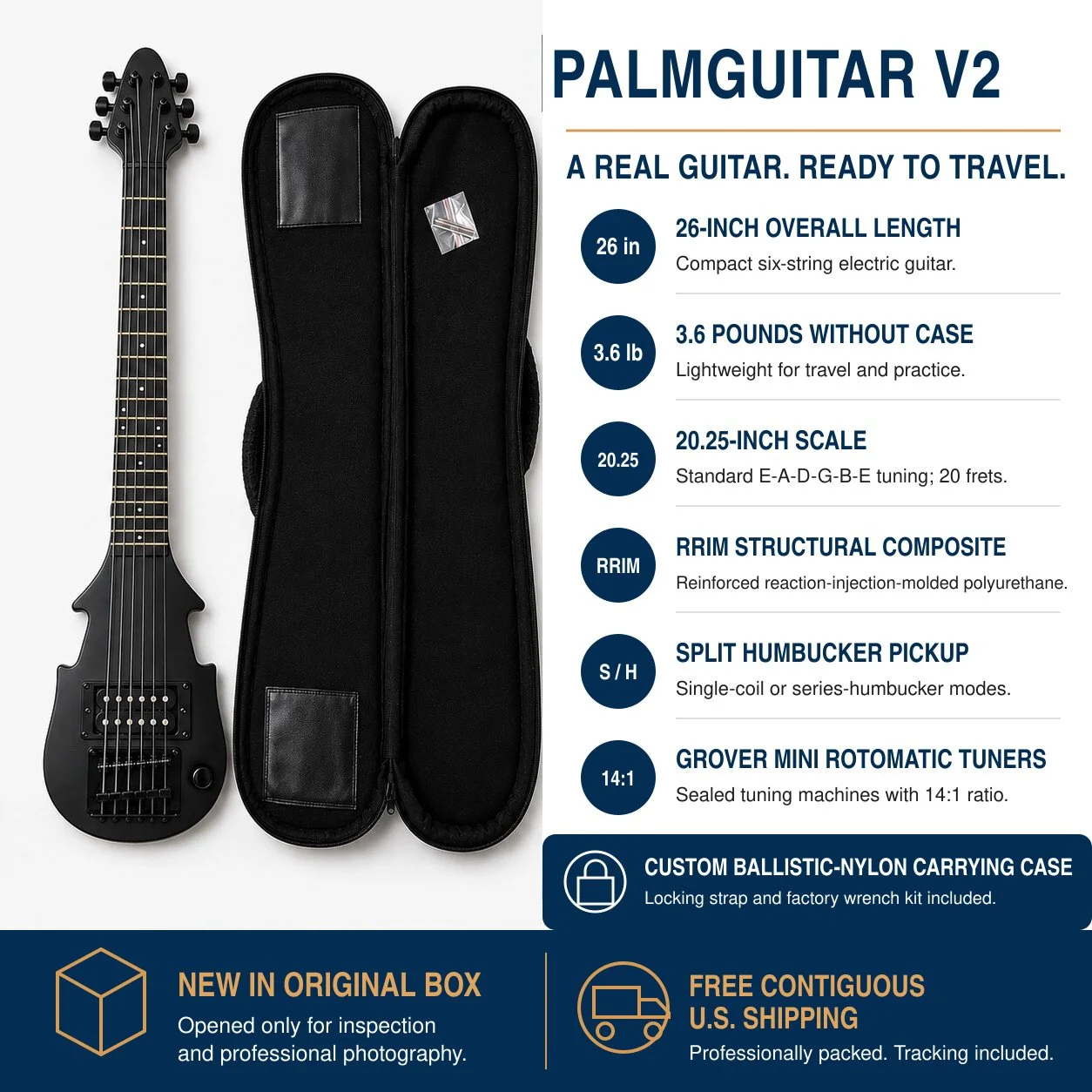
PalmGuitar is constructed of high quality materials, can be played right out of the case and is perfect for travel.
That interest in rethinking the instrument appears throughout Tim's collection.
The Chapman Stick is designed primarily for tapping rather than conventional strumming. The Duesenberg Fairytale is played as a lap steel. Parker Fly guitars became known for lightweight, highly engineered construction. Rick Turner pursued his own ideas about amplified tone, electronics and materials. A Fender B-Bender adds a mechanical system that allows the player to change the pitch of a string while playing.
This is not simply a collection of expensive guitars or recognizable names. It is a collection assembled by someone interested in what happens when makers reconsider the instrument itself.
From a room of guitars to an organized inventory
The first step was not pricing. It was identification.
Each instrument had to be photographed and documented. We recorded makers, model names and serial numbers. We looked for original cases, receipts and related paperwork. We examined hardware, electronics and visible changes that could affect originality or value.
That distinction matters. Two guitars that look nearly identical in a quick photograph can have very different production histories and values. Replacement tuners, modified electronics, missing accessories or an incorrect model designation can change the market response substantially. On uncommon instruments, one wrong assumption can distort the entire price analysis.
We also had to separate rarity from value. An instrument can be difficult to find and still have a very small pool of buyers. A familiar production guitar may be easier to sell than a technically rarer instrument. We do not describe every guitar in this collection as rare or historically important. The strength of the collection is its range and the number of instruments that require individual attention.
A collection that crosses several parts of guitar history
Over the years, Sundown Modern Vintage & Estate Sales has handled some remarkable collections, including hundreds of pieces of vintage Pyrex, more than 8,000 vintage postcards, extensive vinyl record collections, Asian woodblock prints, and substantial collections of antiques and vintage items. Even with that experience, the Richards guitar collection stood apart because of the range of instruments it contained and the history behind them. Among the instruments we have documented, researched or marketed are:
PalmGuitar models and related material
Chrysalis Serial No. 001
Chapman Stick
Duesenberg Fairytale lap steel
Parker Fly guitars
Rick Turner Renaissance
Rickenbacker 360/12
Gibson Chet Atkins SST
Ibanez AR105 Artist
Fender Nashville B-Bender Telecaster
Fender Eric Clapton Stratocaster
There are additional guitars in the collection, including more accessible production models. The instruments shown here are selected because they best demonstrate the collection's range, not because they are the only guitars involved.
Researching the market instead of repeating asking prices
Once an instrument is identified, the next question is not simply, "What is one listed for?"
Current asking prices show what sellers hope to receive. They do not prove value. We look for completed sales, compare the exact model and production period, evaluate condition and originality, and account for the accessories or documentation included with the instrument.
That process becomes harder when only a few public sales exist. Some of these instruments were produced in limited numbers or have several versions that are easy to confuse. In those cases, the honest answer is sometimes a price range rather than a single supposedly precise number.
We then select the sales venue. A specialized instrument may need national exposure. A high-value guitar may be better handled through direct inquiry so that inspection, payment, pickup and insured shipping can be settled before the transaction. A more recognizable model may perform efficiently through a local marketplace. We continue to use more than one venue because the buyers are not all in the same place.
Chrysalis Guitar Serial No. 001
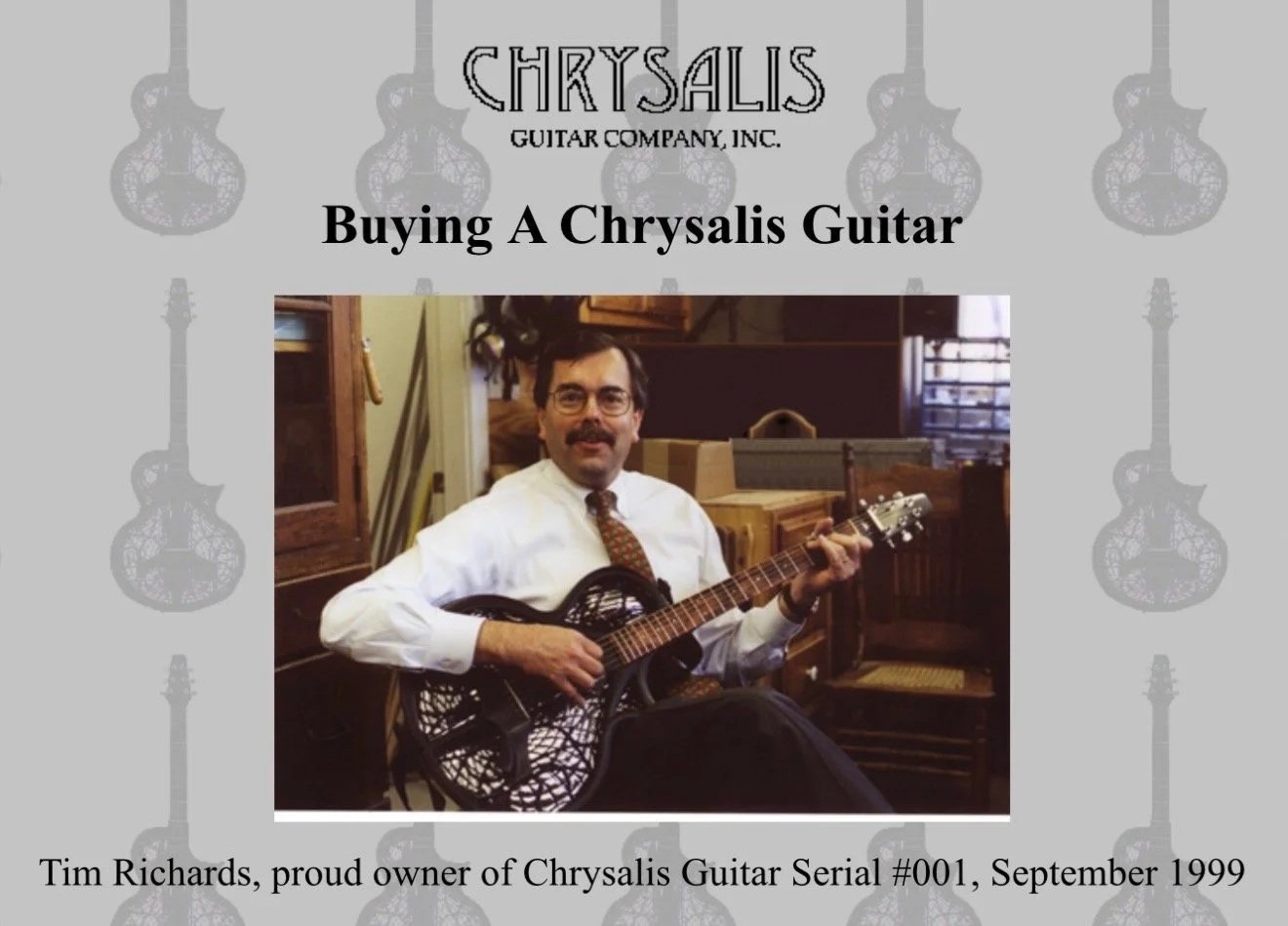
PalmGuitar inventor Tim Richards with Serial Number 1 Chrysalis Guitar
Of all the instruments encountered so far, Chrysalis Serial No. 001 presented one of the clearest examples of why specialized research matters.
Its open-frame construction was unlike a conventional solid-body guitar, and there was very little useful public sales information available. Research led us into the related history of Chrysalis and Ridgewing instruments and to people with direct knowledge of that history.
The eventual buyer was someone closely involved with maintaining the Chrysalis and Ridgewing website and preserving information about the company. The guitar went to a buyer who understood why Serial No. 001 mattered and valued its place in the company's history.
That outcome was not produced by treating the instrument as another guitar in a large lot. It came from identifying it correctly, documenting it and proactively finding the right person who would be interested in such a unique instrument.
The role of an estate sale company
At first glance, a guitar collection may appear to belong entirely with a music store or specialty dealer. In reality, the work required here is central to professional estate liquidation.
An estate sale company regularly encounters property outside any single area of expertise. The responsibility is not to pretend to know everything immediately. It is to recognize when an item requires more research, consult reliable sources, document what can be supported and select the most appropriate sales channel.
The same process applies to artwork, jewelry, vehicles, antiques, records, tools and specialized collections. Some items belong in an online estate auction. Others perform better through a private sale, specialty platform, dealer network or direct local offering. A well-managed liquidation does not force every object through the same system. Knowing where and how to sell an item is just as important as researching it and can make a meaningful difference in the client’s final return.
Working on behalf of the Richards family, Sundown has been responsible for organizing the inventory, researching the instruments, preparing photographs and descriptions, evaluating available markets, communicating with prospective buyers and managing completed sales. Several instruments have already sold. Others are currently available and more remain to be evaluated.
This article is the beginning of the public story, not the end of the project. We will share additional instruments, research and sale results as we continue working through the collection.
If you are managing an estate, downsizing a home or responsible for a specialized collection in Connecticut, Sundown Modern Vintage & Estate Sales, LLC can help identify the property, determine the appropriate sales channels and manage the liquidation from beginning to end.
To ask about an instrument in the collection or schedule a consultation, visit www.sundownestatesalesct.com or call/text 203-577-9275.